|
| Mencken |
These words about Machen by the journalist H L Mencken written in 1931 are found
here.
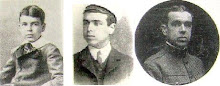
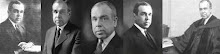
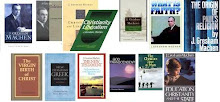
Thinking of the theological doctrine called Fundamentalism, one is apt to think at once of the Rev. Aimee Semple McPherson, the Rev. Dr. Billy Sunday and the late Dr. John Roach Straton. It is almost as if, in thinking of physic, one thought of Lydia Pinkham or Dr. Munyon. Such clowns, of course, are high in human interest, and their sincerity need not be impugned, but one must remember always that they do not represent fairly the body of ideas they presume to voice, and that those ideas have much better spokesmen. I point, for example, to the Rev. J. Gresham Machen, D.D. Litt.D., formerly of Princeton and now professor of the New Testament in Westminster Theological Seminary, Philadelphia. Dr. Machen is surely no mere soap-boxer of God, alarming bucolic sinners for a percentage of the plate. On the contrary, he is a man of great learning and dignity – a former student at European universities, the author of various valuable books, including a Greek grammar, and a member of several societies of savants. Moreover, he is a Democrat and a wet [against Prohibition], and may be presumed to have voted for Al [Smith] in 1928. Nevertheless, this Dr. Machen believes completely in the inspired integrity of Holy Writ, and when it was questioned at Princeton he withdrew indignantly from those hallowed shades, leaving Dr. Paul Elmer More to hold the bag.
I confess frankly, as a life-long fan of theology, that I can find no defect in his defense of his position. Is Christianity actually a revealed religion? If not, then it is nothing; if so, then we must accept the Bible as an inspired statement of its principles. But how can we think of the Bible as inspired and at the same time as fallible? How can we imagine it as part divine and awful truth and part mere literary confectionery? And how, if we manage so to imagine it, are we to distinguish betwen the truth and the confectionery? Dr. Machen answers these question very simply and very convincingly. If Christianity is realy true, as he believes, then the Bible is true, and if the Bible is true, then it is true from cover to cover. So answering, he takes his stand upon it, and defies the hosts of Beelzebub to shake him. As I have hinted, I think that, given his faith, his position is completely impregnable. There is absolutely no flaw in the arguments with which he supports it. If he is wrong, then the science of logic is a hollow vanity, signifying nothing.
His moral advantage over his Modernist adversaries, like his logical advantage, is immense and obvious. He faces the onslaught of the Higher Criticism without flinching, and he yields nothing of his faith to expediency or decorum. Does his searching of Holy Writ compel him to believe that Jesus was descended from David through Joseph, and Matthew says, and yet begotten by the Holy Ghost, as Matthew also says, then he believes it calmly and goes on. Does he encounter witches in Exodus, and more of them in Deuteronomy, and yet more in Chronicles, then he is unperturbed. Is he confronted, in Revelation, with angels, dragons, serpents and beasts with seven heads and ten horns, then he contemplates them as calmly as an atheist looks at a chimpanzee in a zoo. For he has risen superior to all such trivial details, the bane of less devout and honest men. The greater marvel swallows all the lesser ones. If it be a fact, as he holds, that Yahweh has revealed the truth to His lieges on this earth, then he is quite as willing to accept and cherish that truth when it is odd and surprising as when it is transparent and indubitable. Believing, as he does, in an omnipotent and omniscient God, maker of heaven and earth, he admits freely that God probably knows more than he himself knows, both of the credible an the incredible, though he is a member of both Phi Beta Kappa and the American Philological Assocation.
It must be plain that the Modernists are in a much weaker position. The instant they admit that only part of the Bible may be rejected, if it be only the most trifling fly-speck of the Pauline Epistles, they admit that any other part may be rejected. Thus the divine authority of the whole disappears, and there is no more evidence that Christianity is a revealed religion than there is that Mohammedianism is. It is idle for such iconoclasts to say that one man – usually the speaker – is better able to judge in such matters than other men, for they have to admit in the same breath that no man’s judgment, however learned he may be, is infallible, and that no man’s judgment, however mean he may be, is neglibible. They thus reduce theology to the humble level of a debate over probabilities. Such a debate it has become, in fact, in the hands of the more advanced Modernists. No two of them agree in all details, nor can they conceibably agree so long as one man, by God’s inscrutable will, differs from all other men. The Catholics get rid of the difficulty by setting up an infallible Pope, and consenting formally to accept his verdicts, bu thet Protestants simply chase their own tails. By depriving revelation of all force and authority, they rob their so-called religion of every dignity. It becomes, in their hands, a mere romantic imposture, unsatisfying to the pious and unconvincing to the judicious.
I have noted that Dr. Machen is a wet. This is somewhat remarkable in a Presbyterian, but certainly it is not illogical in a Fundamentalist. He is a wet, I take it, simply because the Yahweh of the Old Testament and the Jesus of the New are both wet – because the whole Bible, in fact, is wet. He not only refuses to expunge from the text anything that is plainly there; he also refuses to insert anything that is not there. What I marvel at is that such sincere and unyielding Christians as he is do not start legal proceeding against the usurpers who now disgrace the name. By what right does a Methodist bishop, in the face of John 2:1-11, Matthew 11:19 and Timothy 5:23, hold himself out as a follower of Jesus, and even as an oracle on Jesus’ ideas and desire? Surely there is libel here, and if I were the believer that Dr. Machen is I think I’d say that there is also blasphemy. I suggest formally that he and his orthodox friends get together, and petition some competent court to restrain the nearest Methodist congregation from calling itself Christian. I offer myself a witness for the plaintiffs, and promise to come well heeled with evidence. At worst, such a suit would expose the fraudulence of the Methodist claim and redound greatly to the glory and prosperity of the true faith; at best, some judge more intelligent and less scary than the general might actually grant the injunction.