This blog chiefly seeks to collate materials available elsewhere on the net by or about J Gresham Machen


Showing posts with label Quotations. Show all posts

Wednesday, 16 June 2010

Serious humour and tobacco


I have come to the conclusion that the two institutions which Germany most needs are (1) The Sabbath; and (2) American Football.
... What a wonderful aid tobacco is to friendship and Christian fellowship.
“The fellows are in my room now on the last Sunday night, smoking the cigars and eating the oranges which it has been the greatest delight I ever had to provide whenever possible. My idea of delight is a Princeton room full of fellows smoking. When I think what an aid tobacco is to friendship and Christian patience, I have sometimes regretted that I never began to smoke.” Stonehouse Biography pp 84, 85, 506

Machen on social betterment

material benefits were never valued in the apostolic age for their own sake, they were never regarded as substitutes for spiritual things. That lesson needs to be learned. Social betterment, though important, is insufficient; it must always be supplemented by God’s unspeakable gift,
J Gresham Machen, New Testament, ed, John Cook, pp 345, 346

Monday, 26 October 2009

Machen on Controversy

Again, men say that instead of engaging in controversy in the Church, we ought to pray to God for a revival; instead of polemics, we ought to have evangelism. Well, what kind of revival do you think that will be? What sort of evangelism is it that is indifferent to the question what evangel is it that is to be preached? Not a revival in the New Testament sense, not the evangelism that Paul meant when he said, 'Woe is be unto me, if I preach not the gospel.' No, my friends, there can be no true evangelism which makes common cause with the enemies of the Cross of Christ. Souls will hardly be saved unless the evangelists can say with Paul: "If we or an angel from heaven preach any other gospel than that which we preached unto you, let him be accursed!"Every true revival is born in controversy, and leads to more controversy. That has been true ever since our Lord said that He came not to bring peace upon the earth but a sword. And do you know what I think will happen when God sends a new Reformation upon the Church? We cannot tell when that blessed day will come. But when the blessed day does come, I think we can say at least one result that it will bring. We shall hear nothing on that day about the evils of controversy in the Church. All that will be swept away as with a mighty flood. A man who is on fire with a message never talks in that wretched, feeble way, but proclaims the truth joyously and fearlessly, in the presence of every high thing that is lifted up against the gospel of Christ.
J Gresham Machen, The Importance of Christian Scholarship

Machen on Good News

What I need first of all is not exhortation, but a gospel, not directions for saving myself but knowledge of how God has saved me. Have you any good news? That is the question that I ask of you. I know your exhortations will not help me. But if anything has been done to save me, will you not tell me the facts?
J Gresham Machen, Christian Faith in the Modern World

Thursday, 22 October 2009

Machen on the cross

"I do not think that what the New Testament says about the cross of Christ is particularly intricate. It is, indeed, profound, but it can be put in simple language. We deserved eternal death; the Lord Jesus, because he loved us, died in our stead upon the cross. It is a mystery, but it is not intricate. What is really intricate and subtle is the manifold modern attempt to get rid of the simple doctrine of the cross of Christ in the interests of human pride. Of course there are objections to the cross of Christ, and men in the pulpits of the present day pour out upon that blessed doctrine the vials of their scorn; but when a man has come under the consciousness of sin, then as he comes into the presence of the cross, he says with tears of gratitude and joy, He loved me and gave himself for me."
– J. Gresham Machen, “What the Bible Teaches About Jesus,” in Selected Shorter Writings, ed. D.G. Hart. (Phillipsburg, NJ: Presbyterian and Reformed, 2004), 30

Tuesday, 26 May 2009

On Paul's fearless honesty

And in these sad days, when Christian language so often conceals a profoundly unchristian mind and heart, would to God that we had, in all our churches, less empty pious words, less of a foolish optimism, and more of the fearless honestly of Paul.
From Notes on Galatians

On Applied Christianity

Liberals are constantly talking about 'applied Christianity' without having any Christianity to apply.

Wednesday, 13 May 2009

On modern scientific materialism

Modern, scientific utilitarianism, in other words, did not succeed in producing the millennium prior to 1914; and there is not the slightest evidence that it has producted the millenium since that time or that it ever will produce the millenium in the ages to come. Indeed modern scientific utiltiarianism may produce something far more terrible than anything that we have seen as yet.
From the Baccalaurete Address at Hampden-Sydney College on June 9, 1929

Wednesday, 11 March 2009

On Law

A new and more powerful proclamation of law is perhaps the most pressing need of the hour; men would have little difficulty with the gospel if they had only learned the lesson of the law. As it is, they are turning aside from the Christian pathway; they are turning to the village of Morality, and to the house of Mr. Legality, who is reported to be very skillful in relieving men of their burdens ... 'Making Christ Master' in the life, putting into practice 'the principles of Christ' by one's own efforts-these are merely new ways of earning salvation by one's obedience to God's commands.
From What is faith?

Thursday, 5 March 2009

On simplicity and theology

I'm not sure where this oft quoted gem comes from

The more we know of God, the more unreservedly we will trust him; the greater our progress in theology, the simpler and more childlike will be our faith.

Wednesday, 11 February 2009

On the poor

For ye have the poor with you always, and whensoever ye will ye may do them good; but me ye have not always. Mark 14:7
Here in one of the most unforgettable, characteristic words that Jesus ever uttered, our Lord actually contrasts the service of the poor with the service of Him. “Ye have the poor with you always,’ he said, ‘and whensoever ye will ye may do them good; but me ye have not always.’ We have not Jesus always with us in the sense in which the woman had Him with her at Bethany; we cannot pour any precious ointment upon His head. But in a higher better sense we have Him with us still. And surely we must not neglect the privilege of communion with Him.
Certainly I am not advocating neglect of external service. Without that it is quite impossible that we should be true disciples of Jesus. It is a poor and untrue religion which leaves the hungry in distress. But we shall perform such services all the better if we take time also to commune with Jesus Himself. Do you think that the Christian life is concerned only with philanthropy; do you think that activity in social service is all that our Lord Desires? Oh no, my friends. Those things are absolutely necessary to the Christian, but they are not all that is necessary. If we are true Christians, we shall not neglect those things; but we shall also take time to go into our closet and close the door; and there, with the world shut out, with even our service forgotten for the moment, we shall think no longer of what we do but of what our Savior has done, and we shall pour out upon Him, with an abandon like that of the woman at Bethany, our gratitude and love and praise.
…In these words to the woman at Bethany our Lord sets us free from the oppressive tyranny of the efficiency expert…
J. Gresham Machen – The Claims of Love (In God Transcendent)

Monday, 12 January 2009

On Good news

What good does it do to me to tell me that the type of religion presented in the Bible is a very fine type of religion and that the thing for me to do is just to start practicing that type of religion now? ... I will tell you, my friend. It does me not one tiniest little bit of good. ... What I need first of all is not exhortation, but a gospel, not directions for saving myself but knowledge of how God has saved me. Have you any good news? That is the question that I ask of you. I know your exhortations will not help me. But if anything has been done to save me, will you not tell me the facts?"
(Cited in Michael Horton's Trust and Obey, p 40.
From J. Gresham Machen, Christian Faith in the Modern World Macmillan, 1936 p 57)

Friday, 12 December 2008

On being polemical

Men tell us that our preaching should be positive and not negative, that we can preach the truth without attacking error. But if we follow that advice we shall have to close our Bible and desert its teachings. The New Testament is a polemic book almost from beginning to end.
Some years ago I was in a company of teachers of the Bible in the colleges and other educational institutions of America. One of the most eminent theological professors in the country made an address. In it he admitted that there are unfortunate controversies about doctrine in the Epistles of Paul; but, said he in effect, the real essence of Paul's teaching is found in the hymn to Christian love in the thirteenth chapter of 1 Corinthians; and we can avoid controversy today, if we will only devote the chief attention to that inspiring hymn.
In reply, I am bound to say that the example was singularly ill-chosen. That hymn to Christian love is in the midst of a great polemic passage; it would never have been written if Paul had been opposed to controversy with error in the Church. It was because his soul was stirred within him by a wrong use of the spiritual gifts that he was able to write that glorious hymn. So it is always in the Church. Every really great Christian utterance, it may almost be said, is born in controversy. It is when men have felt compelled to take a stand against error that they have risen to the really great heights in the celebration of truth.
From an essay on Christian scholarship

On being clear

Clear-cut definition of terms in religious matters, bold facing of the logical implications of religious views, is by many persons regarded as an impious proceeding. May it not discourage contribution to mission boards? May it not hinder the progress of consolidation, and produce a poor showing in columns of Church statistics? But with such persons we cannot possibly bring ourselves to agree. Light may seem at times to be an impertinent intruder, but it is always beneficial in the end. The type of religion which rejoices in the pious sound of traditional phrases, regardless of their meanings, or shrinks from "controversial" matters, will never stand amid the shocks of life. In the sphere of religion, as in other spheres, the things about which men are agreed are apt to be the things that are least worth holding; the really important things are the things about which men will fight.
In the intro to Christianity and Liberalism

On the real Jesus

Very different is the imitation of the real Jesus – the Jesus of the New Testament who actually lived in the first century of our era. That Jesus advanced lofty claims; but His claims, instead of being the extravagant dreams of an enthusiast, were sober truth. On His lips, therefore, language which in the reduced Jesus of modern reconstruction would be frenzied or absurd becomes fraught with blessing for mankind. Jesus demanded that those who followed Him should be willing to break even the holiest ties–He said, "If a man cometh to me and hateth not his father and mother . . . he cannot be my disciple," and "Let the dead bury their dead." Coming from the mere prophet constructed by modern liberalism, those words would be monstrous; coming from the real Jesus, they are sublime. How great was the mission of mercy which justified such words! And how wonderful the condescension of the eternal Son! How matchless an example for the children of men! Well might Paul appeal to the example of the incarnate Savior; well might he say, "Let the same mind be in you which was also in Christ Jesus." The imitation of the real Jesus will never lead a man astray.
Christianity and Liberalism

More quotations

False ideas are the greatest obstacles to the reception of the gospel.

The Christian religion flourishes not in the darkness but in the light. Intellectual slothfulness is a quack remedy for unbelief; the true remedy is consecration of intellectual power to the service of the Lord Jesus Christ.

The type of religion which rejoices in the pious sound of traditional phrases regardless of their meanings, or shrinks from "controversial" matters, will never stand amid the shocks of life.

A low view of law leads to legalism in religion; a high view makes man a seeker after grace.

Monday, 1 December 2008

On preaching sin

No man is interested in a piece of good news unless he has the consciousness of needing it; no man is interested in an offer of salvation unless he knows that there is something from which he needs to be saved. It is quite useless to ask a man to adopt the Christian view of the gospel unless he first has the Christian view of sin.

Machen, God Transcendent, 1949

Monday, 3 November 2008

On the miracle of miracles

Found here
“The very point of the Christian view of the cross is that God does not wait for someone else to pay the price of sin, but in His infinite love has Himself paid the price for us– God Himself in the person of the Son, loved us and gave Himself for us; God Himself in the person of the Father, who so loved the world that He gave His only-begotten Son.
It is a strange thing that when men talk about the love of God, they show by every word that they utter that they have no conception at all of the depths of God’s love.
If you want to find an instance of true gratitude for the infinite grace of God, do not go to those who think of God’s love as something that cost nothing, but go rather to those who in agony of soul have faced the awful fact of the guilt of sin, and then have come to know with a trembling wonder that the miracle of all miracles has been accomplished, and that the eternal Son has died in their stead.”
– J. Gresham Machen, “What the Bible Teaches About Jesus,” in Selected Shorter Writings, ed. D.G. Hart. (Phillipsburg, NJ: Presbyterian and Reformed, 2004), 31-2.

Friday, 17 October 2008

On the Reformed Faith

This quotation is again on several blogs including this one here.
"When a man has once come into sympathetic contact with that noble tradition of the Reformed faith, he will never readily be satisfied with a mere “Fundamentalism” that seeks in some hasty modern statement a greatest common measure between men of different creeds. Rather will he strive always to stand in the great central current of the church’s life that has come down to us through Augustine and Calvin to the standards of the Reformed faith."
From Machen's Selected Shorter Writings (Phillipsburg, NJ: Presbyterian and Reformed Publishing), 551.

Friday, 26 September 2008

More Trueman on Machen

The article below is in the latest edition (33.2 (2008)) of Themelios here

Minority Report
The Second Most Important Book You Will Ever Read
— Carl Trueman —
Carl Trueman is Academic Dean, Vice President of Academic Affairs, and Professor of Historical Theology and Church History at Westminster Theological Seminary in Philadelphia, Pennsylvania.

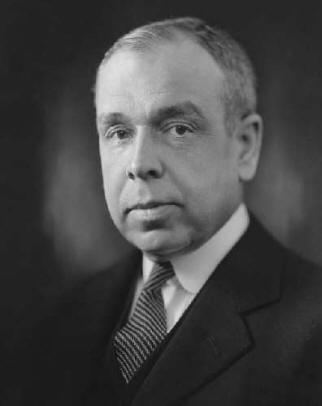
In the lounge next to my office hang the portraits of a number of the founding faculty of my institution, Westminster Theological Seminary in Pennsylvania. There is one of John Murray, the dour-looking Scotsman with the glass eye. Legend has it that you could tell which eye was the real one because that was the one which did not smile. There is one of Ned Stonehouse, whose good looks in early faculty photos would seem more appropriate to a Hollywood heart-throb of the 1930s than a learned professor of New Testament. Then above the fireplace, now somewhat moth-eaten and in need of restoration, is the magnificent portrait of the founder of the Seminary, the great J. Gresham Machen, a name synonymous with both exacting orthodox scholarship on the New Testament and, more than that, valiant struggle for the truth in both church and seminary.
Machen had a stellar academic background: he studied at Johns Hopkins in Baltimore, then Princeton Seminary under the great B. B. Warfield, and also in Germany where his mind was set on fire by the passionate liberalism of the wild yet brilliant Wilhelm Herrmann. Yet in the 1920s and ’30s he became a passionate advocate for Christian orthodoxy amidst the conflicts that were shaking both Princeton, where he was a professor, and the Presbyterian Church of which he was a member and an office-bearer. The result of these conflicts was the founding of (1) Westminster Theological Seminary in 1929 as an institution committed to continuing the teaching of theology according to the Westminster Confession of Faith and Catechisms and (2) the Orthodox Presbyterian Church in 1936 as a church committed to maintaining biblical church standards in doctrine and life.
Machen also possessed a key quality which is evident in many of the great church leaders throughout history: the ability to write and communicate at both a high scholarly level (as in his book on the virgin birth) and at the level of the ordinary (if there is such a thing) believer in the pew, and to do the latter in a manner which is not condescending or patronizing. His was a rare gift indeed. Among the greatest examples of this in the Machen corpus is his remarkable little book, entitled simply Christianity and Liberalism, a book still kept in print by Eerdmans, the American publisher.
The thesis of the book is devastatingly simple: Christianity, built on the authoritative, divinely inspired, inerrant revelation of God in Scripture, embodying a robust supernaturalism, and focused on the exclusivity of salvation in the person and work of Christ, is a different religion to that liberalism that repudiates each of these things.
In an age like ours, of course, where fuzzy boundaries, vagueness, doubt, and caution are supreme virtues, Machen’s thesis is likely to appear both arrogant and overstated. But, as Machen himself says in the opening paragraphs, "In the sphere of religion, as in other spheres, the things about which men are agreed are apt to be the things that are least worth holding; the really important things are the things about which men will fight." There is insight here. Before we see Machen as too intolerant, too much a man of a bygone age, let us reflect on the fact that we live in an age that is remarkably certain and intolerant on a whole host of fronts, from racism to poverty to cruelty against animals to homophobia. Regardless of where we come down on each of these issues, very few of us will be indifferent on them, or particularly laissez-faire towards those with whom we disagree on these matters.

Thus, it is not really that Machen is a man of a bygone, intolerant age which makes this little book so offensive to modern ears. We should not flatter our own enlightened times so easily, for it is not the reality of intolerance in itself that has changed. Rather, it is that we now have a different set of issues that arouse intolerance, and this change reflects not only shifting values in society but also in the church, to the extent that she no longer stands intolerantly for her truth as she once did. The question is thus not whether we are intolerant: we surely are. The question is rather: Are we intolerant of the right things? As the value of religious truth has become negligible, so the passions aroused by such in the wider world have died down. That we do not fight over these things is not a virtue; it is rather be a sign that we just do not care about them any more, and that is the result of the downgrading of the Bible in our thinking. We no longer look on it as a book of divine truth and thus of almost unbearable importance; it is now a ragbag of disparate religious reflections, or a collection of texts reflecting on religious psychology, or simply a cacophony of ancient near-eastern tribal mythology.
For Machen, however, the Bible contains truth, and as such is ineradicably doctrinal. Indeed, one
overarching concern in Christianity and Liberalism is simply the vital importance of Christian doctrine to the church: doctrine, he makes clear, is the very heart of Christian testimony. Claiming to honor the Bible without synthesizing the Bible’s teaching into doctrine, into systematic theology, is not really honoring the Bible at all, for the Bible teaches truth, truth which is coherent and can be articulated; and regarding with indifference those things which the Bible clearly sees as important is, in some sense, the worst sin of all. In a memorable passage, Machen discusses how it was a tragedy that Luther and Zwingli fell out so badly over the nature of Christ’s presence in the Lord’s Supper, but how it would have been an even greater tragedy had they simply agreed to differ on the grounds that the matter was of no importance.
Given this doctrinal concern, those who follow Machen in this regard are unlikely to win many friends or influence people in today’s Christian world, where the great doctrines of the faith are often considered less significant than positions on social issues, whether it be the current conservative passion for Christian and home schooling, or the left’s zeal for issues of social justice. Pragmatics—what we do, what results we achieve—has real priority over what we believe and stand for every time. Yet for those who wish to stand within the stream of historic, biblical Christianity, Machen’s book represents a clarion call to action: Christians must realize the essentially doctrinal core of their faith and fearlessly stand upon such without compromise.
The book is also full of pithy sayings that repay careful reflection. Here are a few examples:

"Christ Died"—that is history; "Christ died for our sins"—that is doctrine. Without these two elements, joined in an absolutely indissoluble union, there is no Christianity (27).
When it is once admitted that a body of facts lies at the basis of the Christian religion, the efforts which past generations have made toward the classification of the facts will have to be treated with respect (46).

The modern liberal preacher reverences Jesus; he has the name of Jesus forever on his lips; he speaks of Jesus as the supreme revelation of God; he enters, or tries to enter, into the religious life of Jesus. But he does not stand in a religious relation to Jesus. Jesus for him is an example for faith, not the object of faith (85).

[L]iberalism within the "evangelical" churches is inferior to Unitarianism. It is inferior to Unitarianism in the matter of honesty. In order to maintain themselves in the evangelical churches and quiet the fears of their conservative associates, the liberals resort constantly to a double use of language (111).

Narrowness does not consist in definite devotion to certain convictions or in definite rejection of others. But the narrow man is the man who rejects the other man’s convictions without first endeavoring to understand them, the man who makes no effort to look at things from the other man’s point of view (160).

These are typical of the sentiments throughout the book. My own copy has barely a page without some paragraph, sentence, or clause underlined. It is refreshing to read a book that is as clearly thought out as it is written. But the bottom line is not Machen’s style or his logical precision or the passion of his rhetoric. It is his basic point: Christianity and liberalism are two different religions. The difference between them is not a quantitative one, of a system of 100% truth over against a system of 75% truth; rather it is a qualitative one of truth to falsehood, of worship to idolatry, of that which brings blessing to that which ultimately brings only a curse.
That is a crucial message for the church today, particularly for those involved in academic study. Certainly Christianity is no excuse for obscurantism. It is important—indeed, it is a Christian imperative—that we understand and treat fairly the views of opponents, whoever they may be. Intentionally to distort the views of an opponent in order to win an argument is a breach of the ninth commandment and not an option for a disciple of Christ. Nor is Christianity an excuse for being rude and curmudgeonly towards those with whom we disagree. But let us be clear: the supernatural Christianity of the authoritative and divinely inspired Scriptures stands in opposition to all other religious systems, even those that use Christian jargon while yet denying the faith’s basic foundations.
Study can be seductive. The realization that professors who spend their days undermining the faith are actually pretty decent people, interesting and delightful company, loving to their wives and children, and often more likeable than their orthodox counterparts, can produce crises of faith among students more often than many would imagine. The attractive power of real learning should never be underestimated. What Machen’s argument makes clear, however, is that truth is not personal. It is truth, and conformity with such is what is important, not whether we like the people advocating it or not. That Christ has died is fact. That he died for my sins is doctrine. That the person telling me this might be less likeable than that really decent and friendly professor who denies the resurrection is irrelevant.
Theological students should reach for Machen’s little book every year to remind themselves that
orthodoxy does not equate to obscurantism, but that there is something really at stake here in the struggle between orthodox, supernatural Christianity and everything else. Indeed, I would venture to say that this is the second most important book that theologians could ever read. As to the first: well, if you don’t know what that is, read chapter four in Christianity and Liberalism, and hang your head in shame!